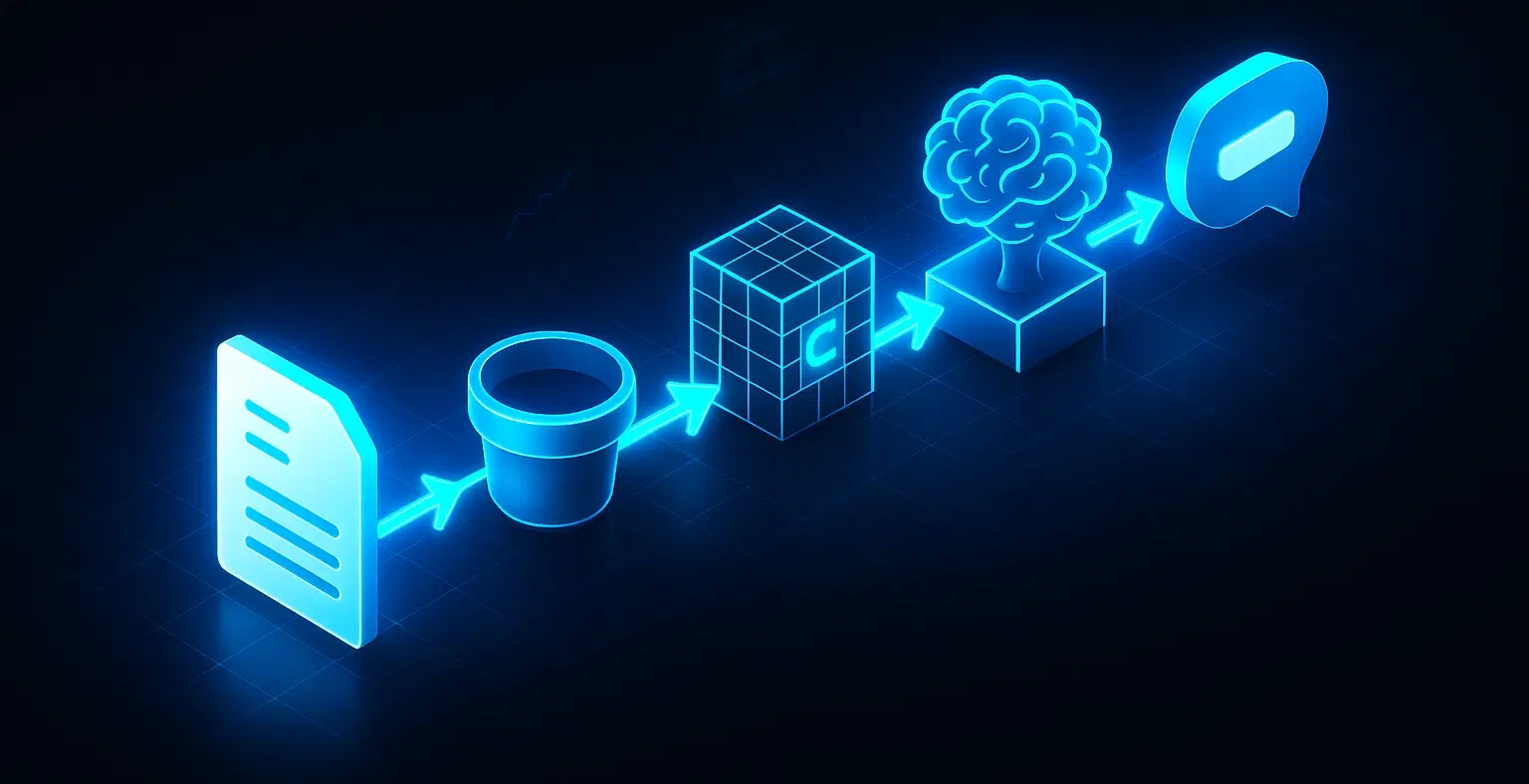
Combining Terraform and Model Context Protocol creates AI infrastructure that is semantically rich and operationally dependable.
Generative AI is fundamentally reshaping software architecture. Rather than relying solely on prompts, enduring value now resides in the contextual layers surrounding each request. The Model Context Protocol (MCP) embodies this shift by treating documents, tools, memory, and policy as first-class objects that can be versioned and reused.
However, context requires infrastructure to persist. Embeddings need database homes, memory buffers demand low-latency storage, planners require compute resources, and logs need collection endpoints. When these resources are built manually or scattered across various scripts, the result becomes fragile and difficult to reproduce. Terraform transforms this scattered approach into reviewable, testable, and rollback-capable code. Merging Terraform with MCP yields context that is both semantically sophisticated and operationally stable.
Why Infrastructure Must Follow Context
An MCP application typically depends on a knowledge base, vector store, short-term memory, external tools, planners, and telemetry systems. Each component corresponds to an AWS resource. S3 buckets or Aurora clusters store data, Chroma on Fargate or EKS handles retrieval, DynamoDB or Redis maintains memory, Lambda or Step Functions executes tools, and CloudWatch aggregates metrics. While building these components once is straightforward, replicating them across teams or customers becomes unmanageable without infrastructure code. Terraform provides a single source of truth that grows with demand.
Building a Retrieval Augmented Generation Context
Consider an agent designed to answer questions about internal documentation. The architecture includes an S3 bucket for documents, a Chroma retriever running on Fargate, Claude v2 through Bedrock for text generation, and CloudWatch for monitoring. Organised folder structures keep components manageable.
Storage implementation relies on vetted modules and pinned versions:
module "documents" {
  source  = "terraform-aws-modules/s3-bucket/aws"
  version = "~> 4.0"

  bucket = "${var.env}-mcp-documents"

  versioning = {
    enabled = true
  }

  tags = local.common_tags
}
The retriever service combines multiple modules — ECS, ALB, and security groups — enabling reuse across different contexts.
The language model is referenced through an SSM parameter, avoiding hardcoded ARNs in the codebase.
A single terraform apply command provisions an isolated, tagged, and observable environment. Deploying identical infrastructure for another team requires only passing different environment variables.
Enriching the Workflow with the AWS Terraform MCP Server
Writing Terraform introduces discipline; maintaining security alignment with AWS best practices demands continuous review. The AWS Terraform MCP Server operates locally, enabling coding assistants to offer guidance on plans, policy, and structure. It integrates Checkov, AWS provider documentation indexes, and sample patterns for Bedrock, OpenSearch Serverless, and SageMaker.
Every plan can now be evaluated for drift, security vulnerabilities, and Well-Architected Framework alignment. The server promotes official modules for networking, managed Kubernetes, and access control, reducing boilerplate work.
Observability Without Overhead
Effective context becomes worthless if visibility into operations is absent. CloudWatch remains the most efficient method for centralising logs, metrics, and traces. The CloudWatch module creates log groups, metric filters, and dashboards in a single block.
For distributed tracing, integrate the AWS Distro for OpenTelemetry sidecar into each ECS task and route spans to X-Ray. Related modules handle configuration heavy lifting, requiring minimal code per task.
Cost Allocation and Tagging
Context that scales without constraints can deplete budgets rapidly. AWS Cost Explorer breaks costs by tag, making consistent tagging essential.
Enable a Cost and Usage Report once so every new context inherits it. Tags cascade from earlier module definitions, ensuring each context appears as a separate line item. Connecting budgets to Slack or SNS alerts finance about overspending before invoices arrive.
Putting It All Together
Identify the context elements powering agents, select official or trusted community modules for each, wrap them with environment-specific variable logic, commit to Git, and enable the MCP server in your IDE. Pull requests then benefit from automatic security scans and architectural guidance. Wire terraform plan and terraform apply into deployment pipelines so every context becomes reproducible from a single command.
Context has become the runtime environment for modern AI systems. Terraform provides that runtime a concrete foundation. The AWS Terraform MCP Server adds real-time guidance maintaining security and efficiency. Treating infrastructure as context accelerates shipping with fewer unexpected issues.